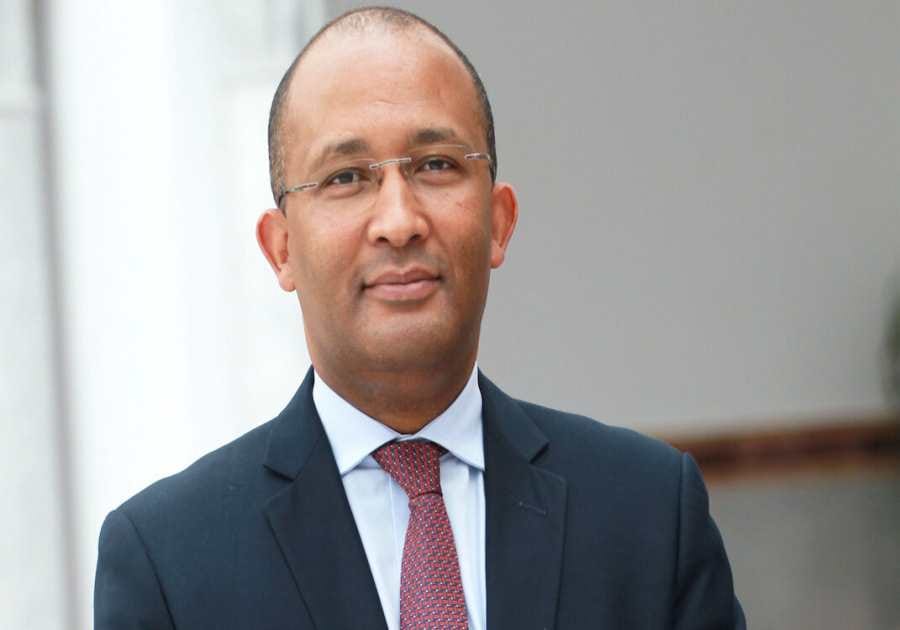
Découvrez les associés de Kais Saied dans la destruction de la démocratie naissante en Tunisie.
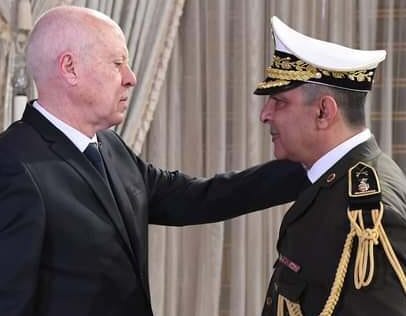
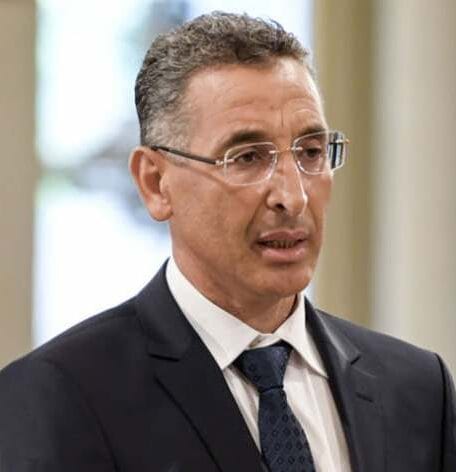
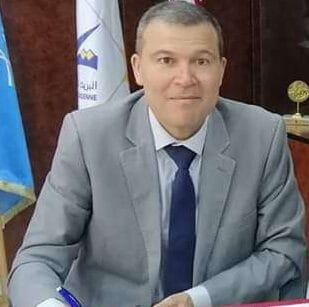
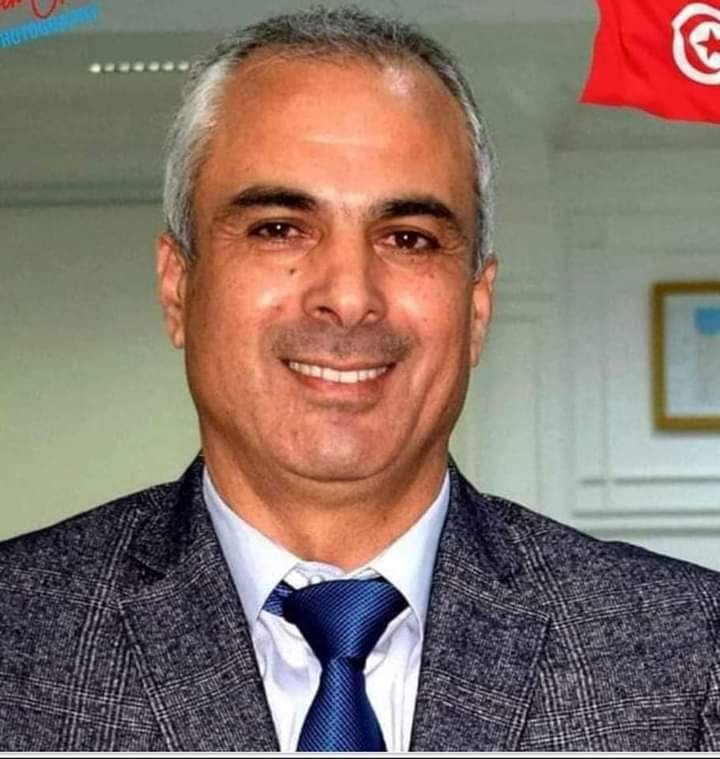

Kais Saied : meneur de coup d'état contre la démocratie en Tunisie et nouveau dictateur soutenu par les militaires
Kais Saied is the seventh President of the Republic of Tunisia and the fourth president after the outbreak of the “Jasmine Revolution” on December 17, 2010, which overthrew the former dictatorial regime headed by Zine El Abidine Ben Ali and his Constitutional Democratic Rally party on January 14, 2011.
Before assuming the presidency, Saied was an assistant university professor in the field of constitutional law. He retired one year before running for the presidential elections. He has no political past and did not oppose the regime of Ben Ali. Rather, he worked in various legal and academic roles organized by the ruling party since the 1980s.
He began his appearance on national television in the first days after the revolution, where he benefited from Tunisia’s transformation into a pluralistic democratic country, and from the new spaces that appeared after the revolution which gave him an opportunity to present his opinion on various topics being debated, such as the new constitution that was issued after the revolution in 2014, the powers of the Presidency of the Republic and the conflict of powers between constitutional institutions.
Kais Saied was careful not to enter into direct disputes with any political party, and at the same time he was keen to communicate with revolutionary youth groups of various intellectual orientations. He participated with them in most sit-ins and protests, and he gave the prevailing impression that he was a supporter of the marginalized, the poor, and the socially excluded.
He has no political past and did not oppose the regime of Ben Ali. Rather, he worked in various legal and academic roles organized by the ruling party since the 1980s.
Saied announced his candidacy for the Tunisian presidential elections in 2019 after the death of former President Beji Caid Essebsi, supported by large youth groups from the north to the south of the country, and without organizing into a political party. He refused to obtain public funding provided to election candidates, and his supporters focused on carrying out simple and populist campaign on social media platforms, mainly Facebook, which is considered the most used platform in Tunisia.
Because of his attempt to present himself in the electoral race as an independent social conservative candidate supported by political parties with “revolutionary” and social tendencies, in addition to the largest political party, the Ennahdha Movement, he was accused during the electoral campaign of being “salafist” in thought and hostile to public and individual freedoms, while his university environment claimed that he held Arab nationalist and Nasserist convictions during his university days.
Kais Saied won the elections against his rival, Nabil Karoui, with 72.1% of the voters’ votes in the second round, after coming in first place during the first round with 18.4% of the votes, with a small difference between him and the second-place finisher, Nabil Karoui, who received 15.58%.
Observers believe that he succeeded in attracting young voters through his communicative language, as he stuck to speaking in Arabic instead of the Tunisian colloquial dialect, and built his entire narrative on a populist discourse about fighting corruption, bringing back smuggled money, self-reliance, and getting rid of everything that is old. His campaign also centered on: The clean man versus the corrupt man, and the man who supports Palestine versus the man who supports normalization with Israel. He also talked about revising the electoral system in addition to establishing a new political system that he called the grassroots system of governance that starts from the bottom to the top.
Built his entire narrative on a populist discourse about fighting corruption, bringing back smuggled money, self-reliance, and getting rid of everything that is old.
Kais Saied was sworn in as president of the country on October 23, 2019, before the parliament that was elected in 2014, before the new parliament began its work, and pledged to adhere to the Constitution of the Second Tunisian Republic of 2014.
Since that date, Tunisia entered into a severe political crisis, the main cause of which is Kais Saied’s attempts to marginalize the legislative and executive authorities and make them merely subordinate to the Presidency of the Republic and to him as a person.
The government of Habib El-Jemni, who was assigned by the newly elected parliament to form a government, failed because Kais Saied set undeclared conditions stipulating that he should prevent the Qalb Tounes party from participating in the government. Despite not having such a constitutional authority, public threats were issued by politicians and parliamentarians loyal to Kais Saied that he would obstruct any government in which the Qalb Tounes party, headed by his rival Nabil Karoui, participates. This is the same message that Habib El-Jemni expressed during his meetings with components of the political scene.
In a second phase, Kais Saied worked to deepen the conflict between himself and Parliament by attracting opposition parliamentary blocs that worked to his benefit, most notably the Free Constitutional Party bloc led by Abir Moussi (a remnant of the regime of Zine El Abidine Ben Ali), along with other blocs defending his choices and policies. He also succeeded in inciting public opinion against political parties and Parliament, using a local and international media orchestra that had no other concern than to denigrate Parliament.
In a third phase, Kais Saied gradually began to support the protests against the government of Hichem Mechichi in response to police practices, economic hardships, and the Coronavirus pandemic, and he adopted a belligerent “warlike” rhetoric against his opponents, particularly during his repeated visits to military barracks and border areas in his capacity as Supreme Commander of the Armed Forces. He also declared himself responsible directly for all forces carrying weapons, whether military or civilian, contrary to what is approved by the Tunisian constitution and laws, in an attempt to gain further support for the institution of the Presidency of the Republic in contravention of the constitution and the law and against the rest of the security institutions in the country.
Kais Saied worked to deepen the conflict between himself and Parliament by attracting opposition parliamentary blocs that worked to his benefit, most notably the Free Constitutional Party bloc led by Abir Moussi (a remnant of the regime of Zine El Abidine Ben Ali).
Despite the efforts of various organizations and parties to purify the political climate and create spaces for dialogue with the President of the Republic, on July 25, 2021, Tunisia’s Republic Day, he decided to take a number of exceptional measures that violate the country’s constitution (2014 Constitution), whereby he kidnapped and disappeared the legitimate Prime Minister Hichem Mechichi, closed Parliament using a military vehicle, and turned the government headquarters in the Kasbah into a closed military security zone
Later, in the presence of army leaders, he dissolved Parliament and dismissed the government. He dismantled the Supreme Judicial Council and the Independent High Authority for Elections. He also announced that he would assume the position of the Public Prosecution Office. He issued a new constitution for the country and accompanied it with an electoral farce organized by a commission he appointed himself without taking into account any laws or standards. These elections witnessed a state of boycott that the Tunisian state had not known since its founding, and achieved the lowest participation rates ever, as most political parties and civil society organizations boycotted it, in addition to a complete lack of transparency, including international monitoring missions.
Amnesty International described the adoption of the new constitution as a setback, stressing that it dismantles or threatens the main institutional guarantees of human rights. The Venice Commission of the Council of Europe said in its report dated May 27, 2022, “It is not realistic to plan to organize a credible and legitimate constitutional referendum on July 25”. This annoyed Saied, who threatened to withdraw Tunisia’s membership from the commission, in addition to calling on its envoys to leave the country immediately.
In the same year, Saied also issued a presidential decree to invite voters to participate in the early legislative elections, which took place in two rounds. The first round was held on December 17, 2022, and the second round was held on January 29, 2023. The voter turnout rate in these elections – according to Saied’s Commission’s numbers – the lowest level locally and globally, as it was 11.2% in the first round and increased to 11.4% in the second round, amid assertions that the real numbers were much lower and that these numbers had been inflated.
Since activating his exceptional measures in accordance with Article 80 of the Constitution, Saied has launched a continuous campaign of prosecutions against political opponents, activists, businessmen, media figures, judges, and anyone who criticizes the political system. He issued Decree No. 54 of 2022 dated September 13, 2022 related to combating crimes related to information and communication systems, which represented a real setback for everything related to freedom of the media, the press, and freedom of expression, which fell by 21 places in 2022 in the annual rankings of Reporters Without Borders.
Saied also targeted the judiciary and, in February 2022, dissolved the Supreme Judicial Council, which is an independent constitutional body whose most prominent responsibilities include ensuring the independence of the judiciary, holding judges accountable, and granting them professional promotions. Saeed replaced him with a temporary body under his authority.
On June 1, 2022, Saied granted himself the power to unilaterally dismiss judges and prosecutors, pursuant to Presidential Order No. 35 of 2022. On the same day, he also issued a second decree (516 of 2022), dismissing 57 judges and prosecutors. Although the Administrative Court ruled in favor of 49 judges who appealed the decision to dismiss them, the Ministry of Justice ignored the court’s order to reinstate them. Saeed continued to tighten his grip on the judiciary through threats of dismissal, transfer, and arrest to turn the judiciary into a tool for punishing his opponents and rivals.
Amnesty International described the adoption of the new constitution as a setback, stressing that it dismantles or threatens the main institutional guarantees of human rights.
The blow to the gains of the Tunisian revolution did not stop, as President Saied changed the date of the Revolution Day celebration, which was held on January 14, the date of the escape of former president, dictator Zine El Abidine Ben Ali, which sparked the anger of the families of the martyrs and wounded of the revolution, who issued a statement denouncing the targeting of the symbolic capital of the revolution, while the revolutionary forces expressed their rejection and disregard for this decision by organizing huge celebrations on January 14, despite all the security restrictions.
Saied continued to perpetuate the policy of non-transparency and corruption in appointments and rewarded and honored everyone who helped him establish his totalitarian regime and undermine democracy. He issued another decree (No. 591 of 2023 dated September 21, 2023) regarding conducting a comprehensive audit of the recruitment and integration processes into the public service, which is tantamount to a “purging” process. And the eradication of any civil servant who opposes or is not loyal to him.